The history of bingo: from 1530s Italy to housie in New Zealand
Bingo is a game of chance in which players mark numbers on a card as a caller draws them at random, and the first to complete the required pattern wins. The game descends from a 16th-century Italian lottery, picked up its modern name in 1929 New York, and reached New Zealand and Australia under the name “housie”.
This guide follows this game’s history from the first Italian draw to today's community halls and online rooms, and explains how housie is run and regulated in New Zealand.
Where bingo began
The oldest ancestor is Il Giuoco del Lotto d'Italia, an Italian state lottery that started around 1530 and is still drawn every week, which makes it one of the longest continuously running games of chance anywhere. The game travelled north to France in the 1770s as Le Lotto, where the familiar card took shape: three rows and nine columns, five numbers and four blanks in each row, with the numbers running 1 to 90. Britain and Germany adopted it during the 19th century, and it crossed to the United States as a carnival game in the 1920s.
|
Year |
Place |
Development |
|
~1530 |
Italy |
Il Giuoco del Lotto d'Italia, a state lottery, begins and is still drawn weekly |
|
1770s |
France |
Le Lotto fixes the 3-row, 9-column card, numbers 1 to 90 |
|
1929 |
Georgia, USA |
Edwin S. Lowe sees the carnival game "Beano" near Jacksonville |
|
1930 |
New York, USA |
Carl Leffler designs 6,000 unique cards; charity bingo spreads |
|
1961 |
United Kingdom |
Commercial bingo legalised, 90-ball halls boom |
|
Mid-1990s |
Online |
The first internet bingo rooms launch |
Bingo shares this pattern of European origin and later reinvention with other casino classics, as the history of roulette shows.
How Beano became bingo
In December 1929, a New York toy salesman, Edwin S. Lowe, stopped at a travelling carnival near Jacksonville, Georgia and found a crowd playing a lotto variant the locals called Beano. A caller drew numbered wooden discs, players covered matching numbers with dried beans, and a completed line brought a shout of "Beano" and a small prize. Lowe took the idea back to New York, ran demonstration games in his apartment, and renamed it after a player who finished a line and stammered "bingo" instead of Beano. His first sets sold as a 12-card pack for one US dollar and a 24-card pack for two.
The early game had a flaw: with only a couple of dozen cards in circulation, several players won at once. To fix it, Lowe hired Carl Leffler, a mathematics professor at Columbia University, who in 1930 designed 6,000 cards with non-repeating number combinations. The work was so demanding that Leffler was reported to have lost his sanity finishing it. Around the same time, a Catholic priest in Wilkes-Barre, Pennsylvania, used bingo to raise parish funds, and charitable bingo spread fast: by 1934, an estimated 10,000 games a week were running across the United States, many in churches, at a time when most other gambling was banned.
90-ball and 75-ball: the two main formats
Two versions split off as the game grew, and both are played in New Zealand today. The 90-ball game is the British and community-hall standard. The 75-ball game is the American version, more common in bars and social settings. The table sets out the practical differences.
|
Feature |
90-ball |
75-ball |
|
Card grid |
3 rows x 9 columns, 15 numbers per card |
5 x 5 grid, 24 numbers plus a free centre |
|
Number range |
1 to 90 |
1 to 75 |
|
Winning patterns |
One line, two lines, full house |
Lines, shapes, full card |
|
Calling style |
Number only, e.g. "two and three, 23" |
Letter and number, e.g. "B-7" |
|
Where it is common |
UK and NZ community halls, charity nights |
US and NZ bars, clubs, social gatherings |
Housie in New Zealand
In New Zealand, the game is usually called housie, a name that carried over from the British army term "housey-housey". It is not a commercial casino product here. Housie is regulated under the Gambling Act 2003 and administered by the Department of Internal Affairs, and it sits in the community-gambling category alongside raffles and lotteries, run by societies to raise money for charitable or community purposes rather than for profit. Prizes are paid in cash, and games use the 1 to 90 number range by default.
Whether an organiser needs a licence depends on the size of the session, as set out below. A local hall night stays well under the threshold, unlike a large session with bigger prize pools.
|
Session |
Prize value |
Turnover |
DIA licence |
|
Small community game |
NZ$5,000 or less |
NZ$25,000 or less |
Not required |
|
Larger session |
Over NZ$5,000 |
Assessed with prizes |
Required, and the organiser must be a corporate society |
One local twist worth knowing: New Zealand "Super Housie" rounds often let players claim three separate lines, top, middle and bottom, for much larger prizes than a standard full house. The full rules for community gambling can be found in the NZ gambling law guide.
“If you are used to bingo as a casino game, housie in New Zealand works differently. The proceeds are legally tied to a community or charitable purpose, which is why you find it at clubs, RSAs and school fundraisers, not on the casino floor.”
Bingo online and on mobile
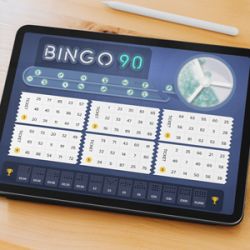
The first Internet bingo rooms launched in the mid-1990s and moved the caller, the cards and the number draw onto a screen, with a random number generator selecting the numbers. Mobile apps followed, adding themed rooms and auto-marking that dabs your card as each number is called. The shift online mirrored what happened to physical halls elsewhere: in Britain, the number of bingo clubs fell from around 600 in 2005 to under 400 by 2014, a decline blamed on the 2007 smoking ban, higher taxes and the rise of online play.
For New Zealand players, the practical change provides accessibility. Community housie still runs in local halls, while the online version plays much like other casino titles you reach from a phone, which we covered on the mobile casinos page. The same online move reshaped older machine games too, as the history of slots records.

Related articles
New Casinos
New
Welcome Bonus
Welcome bonus: max. 200% up to NZ$5,000 + 150 FS + 1 Bonus Game

Welcome Bonus
Welcome Bonus: max. 100% up to NZ$10,000 + 500 Free Spins
Welcome Bonus
Welcome bonus: max. 100% up to 32,000 NZD + 350 FS

Welcome Bonus
Welcome bonus: NZ$5,200 + 150 free spins

Welcome Bonus
Max. 150% up to NZ$20,000 + 500 Free Spins

Welcome Bonus
Welcome Bonus: max. 100% up to NZ$2,100 + 60 FS